WInsights
  • UHNW Event Calendar 2026

  • Contact

  1. Home
  2. WInsights
  3. article

India's Outward Remittances & Global Diversification

Vivek Rajaraman

|

20 May 2026

Global Investment

HNI

A plane wing glowing in the sunset light outside an airplane window, like Indian families sending money abroad to spread their wealth globally

India’s outward remittance trends under the Liberalised Remittance Scheme (LRS) are increasingly reflecting a structural shift in wealth allocation rather than merely a seasonal tax-driven phenomenon. While February witnessed a sharp rise in equity and debt outflows alongside a significant surge in overseas property purchases, these movements point to a deeper evolution in the investment behaviour of high-net-worth individuals (HNIs).

Traditionally, the final quarter of the financial year has seen elevated LRS activity as investors seek to utilise their annual remittance limit before the April 1 reset. The requirement to pay a 20% Tax Collected at Source (TCS) has also historically encouraged investors to time remittances strategically. However, the recent acceleration in overseas investments appears to extend beyond tax optimisation alone.

Investors today are significantly better informed about global investment opportunities and increasingly view international exposure as a deliberate portfolio allocation strategy rather than an opportunistic move. Although tax considerations may influence the timing of remittances, the broader trend toward global diversification is now firmly established and likely to persist over multiple years.

Why Global Markets Are Attracting Indian Investors

Investor interest in overseas markets is being driven by multiple factors. 

One of the most significant is access to investment opportunities that may not be readily available in India. Sectors such as technology, artificial intelligence, and globally dominant consumer businesses continue to attract considerable attention from Indian investors seeking exposure to innovation-led growth.

Currency diversification is another important consideration. Investors increasingly recognise the value of holding assets denominated in different currencies as a hedge against domestic economic cycles and currency volatility.

While India continues to be regarded as a strong long-term growth story, investors are simultaneously acknowledging that global markets can provide differentiated opportunities and complementary sources of returns.

It is likely that the trend toward global diversification through the LRS route will continue into FY27 and beyond. The objective is not to reduce confidence in India’s growth trajectory, but to complement domestic exposure with access to a broader global opportunity set and reduce concentration risk within portfolios.

Related content

19 May 2026

Evaluating Global Diversification

Why Structural Shifts in the Global Economy Are Reshaping Portfolio Conversations.

Article

Global Investment

Market Commentary

Global Investment

Global Investment

Global Investing Coexists with Travel and Education Goals

Despite the rapid growth in overseas equity and property investments, traditional remittance categories such as travel and education continue to remain important for Indian households.

Experts emphasise that global investments are not replacing these expenditures. Instead, affluent families are broadening the range of financial objectives for which overseas remittances are used. Diversification has emerged as a central portfolio goal, but families continue to allocate capital toward overseas education, lifestyle experiences, and long-term family aspirations.

This reflects a more holistic approach to wealth management, where investment planning and personal financial goals increasingly intersect on a global scale.

How NRIs Are Balancing India and Global Investments

The evolving trend is particularly visible among NRIs and globally connected HNIs who maintain financial interests across multiple geographies.

For many NRIs, India continues to hold strong emotional and familial significance, sustaining remittance flows into the country. Some of these funds are also directed toward investments in Indian markets. However, since a large portion of their wealth is generated and held overseas, much of their capital remains invested globally.

While they may allocate relatively more capital to India compared to investors without personal ties to the country, India still often represents only one part of a broader internationally diversified portfolio.

This reflects a wider transformation in modern wealth management, where geographic diversification is increasingly regarded as a foundational principle of long-term investing.

Frequently Asked Questions

Why do outward remittances from India tend to spike toward the end of the financial year?

Because the remittance limit resets every April 1, a lot of people used to rush to use up that year's quota before it expired, leading to a seasonal spike in the January-to-March period. It became a habit more than a strategy.

Why does holding investments in different currencies matter?

If everything you own is priced in rupees, your entire wealth rises and falls with the Indian economy and the rupee's value. Holding some assets in other currencies acts like a cushion if the rupee weakens or the domestic economy slows, that part of your portfolio isn't dragged down the same way.

What's the difference between using remittance limits for travel/education versus for investing?

They both come out of the same annual limit, but the intent is different one is a lifestyle expense that doesn't come back, the other is meant to grow your wealth over time. Increasingly, families are using the same yearly allowance for both, treating it as one overall financial plan rather than separate buckets.

What is "concentration risk," and why does it matter?

It's the risk of having too much of your money tied to one country, currency, or market. If that one thing underperforms, your entire portfolio takes the hit. Spreading investments across geographies is simply a way to avoid having all your eggs in one basket.

What is TCS (Tax Collected at Source) on money sent abroad?

It's a tax (currently 20%) collected upfront when you remit money overseas beyond a certain limit, whether for investing, travel, or other purposes. You're not losing this money permanently; it can usually be claimed back as a credit against your total tax liability, but it does affect cash flow and timing.


MORE INSIGHTS

A futuristic robotic hand interacting with digital financial charts.

UHNI

Family Office

AI

Wealth Management

AI in Wealth Management: Uses, Risks & Human Judgement

Explore how AI is transforming wealth management, from investment research to portfolio reporting, and why human judgement and data privacy remain essential.

Article •25 October 2026
A wind turbine partially obscured by mist

UHNI

Family Office

Philanthropy

Impact Investing

Wealth Management

ESG and Impact Investing Among Indian Family Offices

Understanding ESG and Impact Investing and how family offices approach them.

Explainer •22 October 2026
Applying for an IPO in HNI Category: Process and Key Rules

HNI

Wealth Management

Applying for an IPO in HNI Category: Process and Key Rules

Applying for an IPO in the HNI category goes beyond placing a bid. This guide explains the NII framework, S-HNI vs B-HNI, and the step-by-step application process.

Explainer •21 October 2026
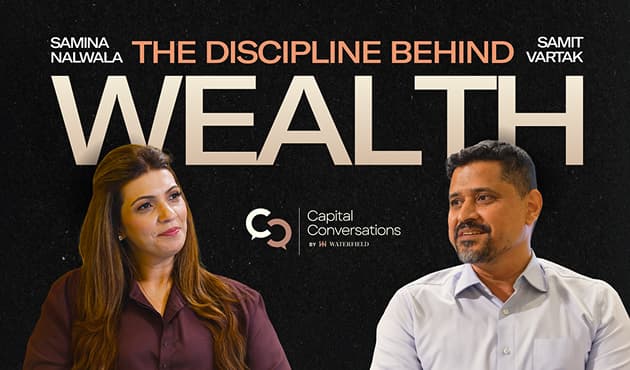
Samina Nalwala and Samit Vartak with the headline “The Discipline Behind Wealth” for Capital Conversations.

Market Commentary

Wealth Management

Capital Conversations | Investing Masterclass ft. Samit Vartak

Samit Vartak shares lessons on small- and mid-cap investing, spotting multibaggers and managing risk.

Podcast •13 October 2026
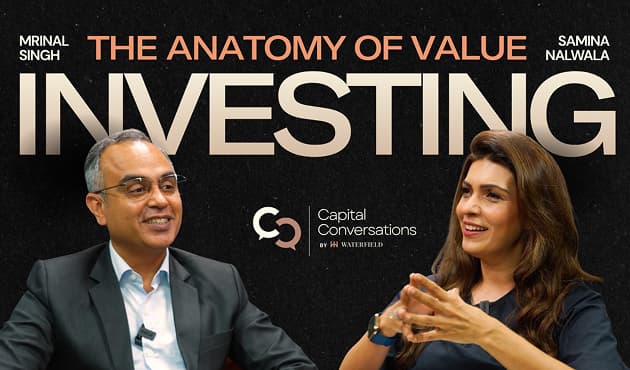
Mrinal Singh and Samina Nalwala with the headline “The Anatomy of Value Investing” for Capital Conversations.

Market Commentary

Wealth Management

Capital Conversations | Value Investing ft. Mrinal Singh

Mrinal Singh explores value vs growth investing, assessing management and building long-term wealth.

Podcast •10 September 2026
A person reviewing reports while using a calculator to analyse data.

HNI

Professionals

Wealth Management

ESOP Proceeds After IPO: A Guide to Managing the Windfall

An IPO turns vested ESOPs into taxable, liquid wealth. This blog covers the tax rules, a step-by-step plan, and mistakes to avoid with the proceeds.

Explainer •28 October 2026
A futuristic robotic hand interacting with digital financial charts.

UHNI

Family Office

AI

Wealth Management

AI in Wealth Management: Uses, Risks & Human Judgement

Explore how AI is transforming wealth management, from investment research to portfolio reporting, and why human judgement and data privacy remain essential.

Article •25 October 2026
A wind turbine partially obscured by mist

UHNI

Family Office

Philanthropy

Impact Investing

Wealth Management

ESG and Impact Investing Among Indian Family Offices

Understanding ESG and Impact Investing and how family offices approach them.

Explainer •22 October 2026
Applying for an IPO in HNI Category: Process and Key Rules

HNI

Wealth Management

Applying for an IPO in HNI Category: Process and Key Rules

Applying for an IPO in the HNI category goes beyond placing a bid. This guide explains the NII framework, S-HNI vs B-HNI, and the step-by-step application process.

Explainer •21 October 2026
Samina Nalwala and Samit Vartak with the headline “The Discipline Behind Wealth” for Capital Conversations.

Market Commentary

Wealth Management

Capital Conversations | Investing Masterclass ft. Samit Vartak

Samit Vartak shares lessons on small- and mid-cap investing, spotting multibaggers and managing risk.

Podcast •13 October 2026
Mrinal Singh and Samina Nalwala with the headline “The Anatomy of Value Investing” for Capital Conversations.

Market Commentary

Wealth Management

Capital Conversations | Value Investing ft. Mrinal Singh

Mrinal Singh explores value vs growth investing, assessing management and building long-term wealth.

Podcast •10 September 2026
A person reviewing reports while using a calculator to analyse data.

HNI

Professionals

Wealth Management

ESOP Proceeds After IPO: A Guide to Managing the Windfall

An IPO turns vested ESOPs into taxable, liquid wealth. This blog covers the tax rules, a step-by-step plan, and mistakes to avoid with the proceeds.

Explainer •28 October 2026
A futuristic robotic hand interacting with digital financial charts.

UHNI

Family Office

AI

Wealth Management

AI in Wealth Management: Uses, Risks & Human Judgement

Explore how AI is transforming wealth management, from investment research to portfolio reporting, and why human judgement and data privacy remain essential.

Article •25 October 2026
A wind turbine partially obscured by mist

UHNI

Family Office

Philanthropy

Impact Investing

Wealth Management

ESG and Impact Investing Among Indian Family Offices

Understanding ESG and Impact Investing and how family offices approach them.

Explainer •22 October 2026
Applying for an IPO in HNI Category: Process and Key Rules

HNI

Wealth Management

Applying for an IPO in HNI Category: Process and Key Rules

Applying for an IPO in the HNI category goes beyond placing a bid. This guide explains the NII framework, S-HNI vs B-HNI, and the step-by-step application process.

Explainer •21 October 2026

Subscribe to WInsights to receive our content straight to your inbox every month.

Contact Us

Your legacy awaits

Fields marked with an asterisk (*) are required.

*Kindly note that this form does not operate as a job portal, and the HR Team will not receive information regarding your candidature

General Contact

+91 22 6621 0700

+91 75338 83388

info@waterfieldadvisors.com

Career

careers@waterfieldadvisors.com

Media

marketing@waterfieldadvisors.com

Follow Us

  • LinkedIn
  • YouTube
  • X
  • Instagram

Offices

142, 14th Floor, Maker Chambers VI, Nariman Point, Mumbai – 400021

7, Avighna House, 82, Dr. Annie Besant Road, Worli Naka, Siddharth Nagar, Worli, Mumbai, Maharashtra 400018

SEBI Office: Plot No. C4-A, 'G' Block, Bandra-Kurla Complex, Bandra(East), Mumbai – 400051

Worldmark 6, 3rd Floor, Gateway District, Aerocity, New Delhi, 110037

14th & 18th Floor, Berger Delhi One, Sector 16B, Noida, Gautam Budh Nagar – 201301

SEBI Office: NBCC Complex, Office Tower-1, 8th Floor, Plate B, East Kidwai Nagar, New Delhi – 110023

Level 5, No. 501, Prestige Garnet, 36, Ulsoor Road, Bengaluru – 560042

SEBI Office: 2nd Floor, Jeevan Mangal Building, No.4, Residency Road, Bengaluru – 560025

Workafella No.10, Uthamar Gandhi Salai, Nungambakkam High Road, Nungambakam, Chennai – 600034

SEBI Office: 7th Floor, 756-L, Anna Salai, Chennai – 600002

1-111, Raheja Woods 8, Central Avenue, Kalyani Nagar, Pune, MH 411006

SEBI Office: Plot No. C4-A, 'G' Block, Bandra-Kurla Complex, Bandra(East), Mumbai – 400051

916, PS Arcadia, Level 9, 4A, Camac Street, Kolkata 700016

SEBI Office: L&T Chambers, 3rd Floor, 16 Camac Street, Kolkata – 700017, West Bengal

GA-04, Block15, Ground Floor, Pragya Accelerator, Rd 1C, Gift City, Gandhinagar – 382355, Gujarat

1004, Regus Alacrity Business Center, Levana Cyber Heights, Vibhuti Khand, Gomti Nagar, Lucknow 226010

The Landmark Hotel, 10, The Mall, Kanpur – 208001

Insight with integrity

About

  • Overview
  • Leadership
  • Brand Story
  • Pressclub
  • Sustainability

Wealth Management

  • Family Business
  • Professionals and CXOs
  • Founders & Entrepreneurs
  • Women Clients

Asset Management

  • Discretionary PMS
  • Waterfield Fund of Funds
  • Smart Beta
  • Global Investment Managers
  • Winghts
  • Careers
  • Contact

waterfield financial and investment advisors private limited

SEBI Registration No
INA000001811
CIN No
U74900MH2012PTC234921
PMS REGISTRATION NO
INP000007818

Waterfield Foundation

CIN NO
U85300MH2023NPL397067

Waterfield Sponsor LLP

LLPIN
ABZ-9314

WATERFIELD INTERNATIONAL IFSC PRIVATE LIMITED

CIN No
U66190GJ2023PTC146493
IFSCA Reg No
IFSCA/FME/II/2025-26/174

Complaint Redressal Officer

Ms. Sweeti Suthar

[email protected]

Complaint Redressal Appellate Officer

Biplab Bhattacharya

[email protected]

Contact No:
+91 22 6621 0700

Waterfield Fund Managers Private Limited

CIN No
U65990MH2020PTC340389
FOF I
IN/AIF2/21-22/0876 (Category 2 AIF)
Name of the Fund Manager
Waterfield Fund Managers Private Limited
FOF II
IN/AIF2/23-24/1275 (Category 2 AIF)
Name of the Fund Manager
Waterfield Fund Managers Private Limited
Co-PMS
INP000008288

waterfield advisors private limited

CIN No
U74120MH2011PTC220601

Status of complaints

Beginning of the month: Nil

Received this month: Nil

Resolved during the month: Nil

Pending at the end of the month: Nil

Reason for pendency: N.A.

Principal Officer

Mr. Subodh Kaistha
Non-Individual Investment Advisor

Mr. Arun Prakash
Non-Individual Investment Advisor (PMS)

principal.officer@waterfieldadvisors.com
+91 22 6621 0700

Compliance & Grievance Officer

Ms. Darshana Bhutak

compliance@waterfieldadvisors.com

Investor Grievance

investor.grievance@waterfieldadvisors.com

Contact No:
+91 22 6621 0700

© 2026 Waterfield Advisors Pvt. Ltd.

  • Privacy Policy |
  • Disclaimer |
  • Regulatory Information